
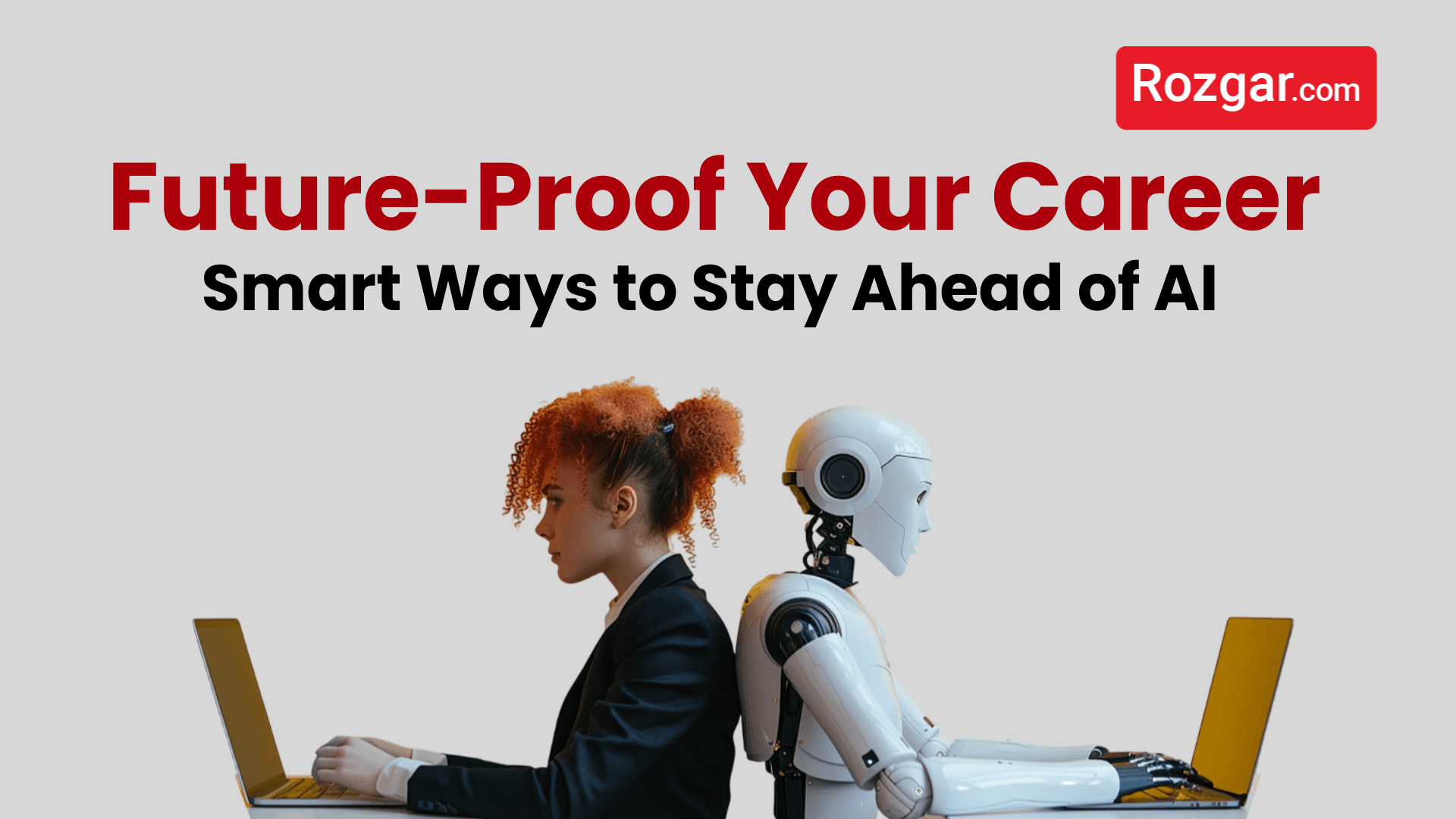
Artificial Intelligenceis rapidly changing how we work, learn, and lead. For professionals across industries, the central question has shifted from whether AI will affect jobs to how to adapt and thrive alongside it. In response, building anAI-Proof Careeris no longer optional — it’s a strategic imperative. This comprehensive guide for Rozgar.com walks you through practical steps, mindsets, and tactics tofuture-proof your careerin the age of AI. This comprehensive guide forRozgar.com walks you through practical steps, mindsets, and tactics to future-proof your career in the age of AI.
Below you’ll find an actionable framework, industry guidance, concrete learning plans, and real-world tips designed for students, early-career professionals, and seasoned workers who want to stay relevant and valuable as automation and intelligent systems transform workplaces.
What Does an AI-Proof Career Really Mean?
AnAI-Proof Careerdoesn’t imply complete immunity to automation. Instead, it describes a professional path where human strengths — creativity, empathy, critical judgment, ethical reasoning, and complex problem solving — remain central. In such careers, AI acts as a multiplier: it augments human productivity rather than replacing it. People in AI-proof roles leverage technology to increase impact, drive strategic decisions, and create outcomes that machines alone cannot generate.
Key features of an AI-Proof Career:
- Emphasis on human-centric skills (empathy, leadership, creativity).
- Strong hybrid competency (domain expertise + technical literacy).
- Continuous learning and adaptability baked into the career plan.
- Ethical and governance awareness around AI systems.
- Ability to translate technical outputs into strategic business value.
Why You Must Future-Proof Your Career Now
AI adoption is accelerating across sectors — healthcare, finance, education, manufacturing, public services, and creative industries. Organizations that harness AI well will outcompete those that don’t. Acting early gives you advantages:
Market Differentiation:Early adopters who combine human skills with AI literacy become sought-after hires.
Resilience:The ability to pivot when roles evolve protects career momentum.
Opportunity Creation:New roles and hybrid functions emerge as AI takes over repetitive tasks.
If you wait until change disrupts your role, you’ll be reacting rather than leading. Start intentionally building afuture-proof your career strategytoday.
The Core Pillars of an AI-Proof Career
To future-proof your career, focus on building across four pillars:
1. Human-Centric Capabilities
Skills that emphasize uniquely human qualities:
- Empathy and emotional intelligence
- Storytelling and persuasive communication
- Complex judgement and ethical reasoning
- Creative problem-solving and design thinking
2. Technical & Data Fluency
You don’t need to be a coder, but basic knowledge helps:
- Understanding AI fundamentals: models, data, bias.
- Comfort with data tools: spreadsheets, basic SQL, visualization.
- Familiarity with AI-driven workflows in your domain.
3. Interdisciplinary & Domain Expertise
Hybrid skills combine domain knowledge with technology:
Examples: healthcare + informatics, finance + data analytics, marketing + AI.
Deep domain expertise makes your experience harder to automate.
4. Continuous Learning & Career Agility
Habitual learning routines and project-based practice.
Portfolio of projects that demonstrate applied skills.
Networking and mentorship to navigate career shifts.
Ten Practical Strategies to Build an AI-Proof Career
Below are ten concrete strategies to help you future-proof your career, with examples and immediate next steps.
1. Learn the Basics of AI (Not to Compete, but to Collaborate)
What to do:Take short courses on AI fundamentals (supervised vs unsupervised learning, model evaluation, data quality, model bias).
Why it matters:Knowing what AI can and cannot do lets you ask the right questions and make informed decisions.
Start now:Complete a 4–8 week online course and summarize three practical takeaways for your team.
2. Build Hybrid Skills: Combine Domain Knowledge with Tech Fluency
What to do:Pair your core expertise with complementary technical tools (e.g., marketers learn analytics; clinicians learn clinical informatics).
Why it matters:Hybrid professionals translate AI outputs into business or clinical decisions.
Start now:Choose one tool (e.g., Google Analytics, Tableau, Python basics) and complete a project applying it to a domain problem.
3. Master Human-Centric Skills That Machines Struggle With
What to do:Invest in communication, persuasion, facilitation, leadership, and negotiation.
Why it matters:These skills remain central for team leadership, client relations, and strategy.
Start now:Join a public speaking club, lead a cross-functional meeting, or take a negotiation workshop.
4. Use AI Tools as Productivity Amplifiers
What to do:Learn how to use AI copilots, prompt engineering basics, and automation scripts relevant to your role.
Why it matters:Those who use AI effectively will deliver more value, faster.
Start now:Experiment with a generative AI tool to streamline one repetitive task and measure time saved.
Showcase your growth by highlightingAI-integrated projectsonRozgar.com Resume Builder
5. Focus on Outcome-Oriented Work, Not Tasks
What to do:Reframe your job in terms of problems solved, not activities performed.
Why it matters:Outcomes are harder to automate; they require judgment and contextual understanding.
Start now:Create a one-page plan listing three outcomes your role should deliver and metrics to measure each.
6. Get Comfortable with Data and Analytics
What to do:Learn how to interpret dashboards, identify bias, and ask diagnostic questions about model outputs.
Why it matters:Data-literate professionals make better decisions and reduce risk.
Start now:Work with a dataset related to your field and create a short insight report.
7. Build a Visible Portfolio that Demonstrates Human+AI Work
What to do:Publish case studies, GitHub repos, dashboards, or narrated presentations showing your projects.
Why it matters:Portfolios prove applied competence and curiosity.
Start now:Document one project where you used AI tools and explain the human decisions you made.
8. Learn Ethical & Governance Considerations
What to do:Study AI ethics frameworks, fairness metrics, and governance best practices.
Why it matters:Ethical oversight is a growing area, critical for trust and compliance.
Start now:Read a practical guide on AI ethics and draft a one-page checklist for evaluating model fairness.
9. Network Strategically Around Future-Focused Communities
What to do:Join industry meetups, AI ethics forums, or cross-disciplinary groups.
Why it matters:Networks reveal opportunities and expose you to real-world use cases.
Start now:Attend one webinar or local meetup and connect with two participants with shared interests.
10. Diversify Income Streams and Project Types
What to do:Freelance, consult, or launch side projects that use your hybrid skills.
Why it matters:Diversification increases resilience and exposes you to varied problem contexts.
Start now:Offer a micro-consulting service or build a side project that solves a niche problem.
Industry Examples: How to Future-Proof Your Career by Sector
Different industries require nuanced approaches. Here are examples of future-proofing by industry:
Healthcare
AI Role:Diagnostic assistance, triage bots, predictive analytics.
Human Edge:Clinical judgment, bedside manner, ethical decisions.
Action:Learn clinical informatics and participate in AI governance for patient data.
Finance
AI Role:Algorithmic trading, risk models, customer segmentation.
Human Edge:Strategic investment decisions, regulatory interpretation, trust management.
Action:Build expertise in explainable AI and regulatory compliance.
Education
AI Role:Adaptive learning, grading automation, content generation.
Human Edge:Mentorship, curriculum design with empathy, socio-emotional learning.
Action:Train in learning design and educational data ethics.
Creative Industries
AI Role:Generative content (audio, video, imagery).
Human Edge:Original conception, cultural nuance, storytelling.
Action:Use AI to iterate faster but own the creative vision and narrative.
A 12–Month Roadmap to Build an AI-Proof Career
Here’s a practical 12-month plan you can adapt to your context. Each quarter focuses on learning + applying.
Months 1–3: Foundations
Complete an AI literacy course (8 weeks).
Map current role tasks and identify three tasks AI could augment.
Start a learning journal.
Months 4–6: Application
Run a small AI-assisted project (automation, dashboard, content prototype).
Share results internally or as a public case study.
Take a course on ethics, data visualization, or prompt design.
Months 7–9: Deepening
Build a cross-functional project with a data specialist or engineer.
Attend an industry conference or virtual summit and write a reflection post.
Seek mentor feedback on your portfolio.
Months 10–12: Scale & Lead
Lead a pilot integrating AI in a team process and measure ROI.
Present learnings to stakeholders.
Update your personal brand (LinkedIn, portfolio) with evidence-based outcomes.
Repeat the cycle:Each new project compounds skills and credibility.
How Employers Will Evaluate Your AI-Readiness
When hiring or promoting, employers look for:
Evidence of applying AI tools to solve real problems (not academic buzzwords).
Hybrid competence: domain depth + technical literacy
Human skills: leadership, communication, ethical judgment.
Learning momentum: recent projects, certifications, or public sharing.
Impact orientation: measurable outcomes and ROI from your initiatives.
Make sure your resume and interviews focus on these aspects.
Common Pitfalls and How to Avoid Them
Pitfall:Over-specializing in narrow tasks that AI can automate.
Avoid by:Combining depth with broader skills (e.g., strategy, ethics).
Pitfall:Ignoring ethical implications in haste to deploy AI.
Avoid by:Building governance checklists and peer review steps into projects.
Measuring Progress: Simple KPIs for Your AI-Proof Journey
Track progress with measurable indicators:
Skill KPIs:Courses completed, tools learned, certifications earned.
Contribution KPIs:Projects completed, time saved, revenue or cost impact.
Visibility KPIs:Presentations given, posts published, network growth.
Governance KPIs:Ethics checklist adoption, audit results, compliance milestones.
Review quarterly and adjust your roadmap.
| Latest Category Jobs | ||
|---|---|---|
| Job Information | Apply Job | |
Senior Manager – SAP BTP Integration Suite(15-20 years) | ||
Microsoft Dynamics 365 ERP Technical Architect(12-15 years) | ||
SAP Functional Consultant(1-8 years) | ||
MACHINE LEARNING ENGINEER(5-10 years) | ||
Lead Salesforce Developer(10-20 years) | ||
IT Service Management Representative(5-7 years) | ||
Conclusion
The most important asset you have is adaptability. Combine curiosity with discipline and treat AI as a collaborator. The future belongs to those who can couple technology fluency with human judgment and ethical stewardship. As youfuture-proof your career, remember that small, consistent steps compound into long-term advantage.
Frequently Asked Questions
Create Your Free Job Alert
Related Posts
View Allबिहार में सत्ता परिवर्तन: जॉ...
बिहार की राजनीति में संभावित सत्ता परिवर्तन को लेकर चर्चा तेज हो गई है। नए नेतृत्व के आने की अटकलों के बीच सबसे बड़ा सवाल यह है कि इसका असर राज्य के जॉब मार्केट और एजुकेशन सेक्टर पर किस तरह पड़ेगा। युवाओं, छात्रों और नौकरी की तैयारी कर रहे उम्मीदव...
read more Yogesh Singh 02 Apr, 2026
Haryana Jobs 2026: 800 एकड़ ...
हरियाणा में रोजगार को लेकर एक बड़ी खुशखबरी सामने आई है। देश की प्रमुख ऑटोमोबाइल कंपनी Maruti Suzuki राज्य में 800 एकड़ में अपना नया मेगा प्लांट स्थापित करने जा रही है। इस प्रोजेक्ट के शुरू होने से न केवल औद्योगिक विकास को बढ़ावा मिलेगा, बल्कि हजार...
read more Yogesh Singh 01 Apr, 2026पंजाब रोजगार समाचार 2026: नई...
पंजाब के युवाओं के लिए साल 2026 रोजगार और करियर के नए अवसर लेकर आया है। राज्य सरकार और विभिन्न विभागों द्वारा नई भर्तियां और रोजगार योजनाएं शुरू की जा रही हैं, जिससे लाखों युव...
read more Yogesh Singh 23 Mar, 2026