
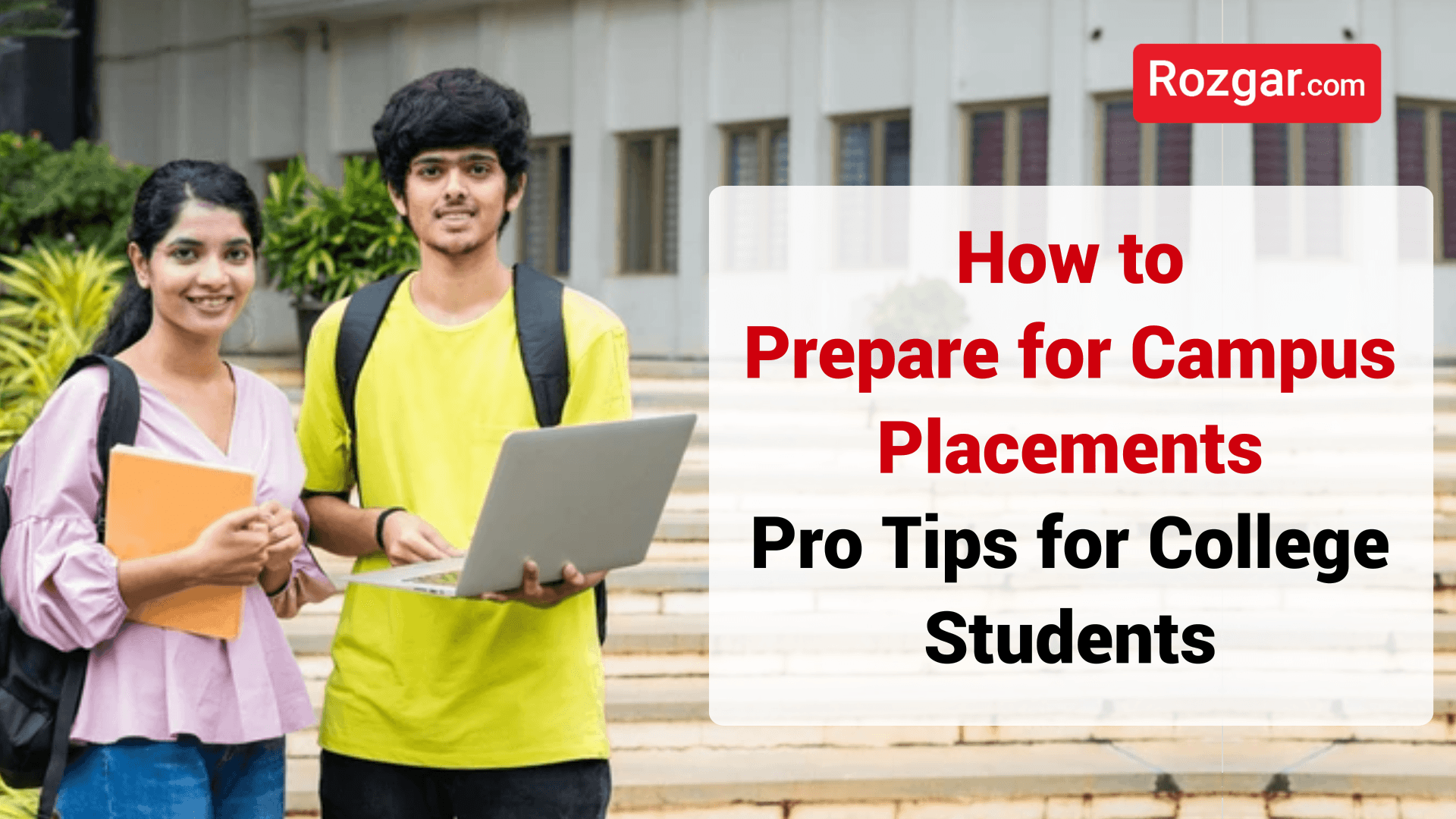
There’s something thrilling about the final year of college — the excitement of stepping into the real world, mixed with that nervous buzz aroundcampus placements.One day you’re joking in the canteen about landing your dream job, and the next, you’re sitting in front of recruiters wondering if your shirt looks too formal.
If you’re feeling the same, relax. Everyone feels that way. Campus placements aren’t just about grades or luck — they’re about preparation, confidence, and showing up as your best self. Here’s how to do it, step by step.
Understand What Campus Placements Are All About
Before you start worrying about interviews, understand how thecampus placement processactually works.
Most companies follow a simple structure:
1. Aptitude Test – Your first filter. Tests your speed, logic, and math.
2. Group Discussion (GD) – Checks how you communicate and think under pressure.
3. Technical Interview – Focuses on what you actually studied.
4. HR Interview – Tests your attitude and cultural fit.
Knowing this helps you plan your prep smartly. You’ll realize it’s not just about knowing everything, but about preparing for each round strategically.
Brush Up on Your Core Subjects
Whether you’re studying engineering, business, or arts — yourcore subjectsmatter. Recruiters expect you to know the fundamentals. They’re not looking for perfect answers, just clarity and logic.
If you’re acomputer sciencestudent, practice coding daily. If you’re intofinance, revise key concepts like balance sheets or ROI. If you’re inmarketing, understand trends and basic tools.
Don’t just memorize — understand. Interviewers love it when you explain concepts in simple, real-life terms. It shows you trulyget it.
How to Prepare for Campus Placements? - GeeksforGeeks
Your Resume: Tell Your Story, Not Just Your Skills
Yourresumeis your first conversation with the recruiter. Make it count.
Keep it short, clean, and focused. Highlight:
- Projects that show creativity or leadership
- Internships or volunteer work
- Skills that are relevant to the role
- Instead of just listing “Team player,” write something like:
- “Led a 4-member team to design a mobile app prototype within a 3-week deadline.”
That sounds real. It tells your story.
Pro Tip:Always proofread. A single typo can make even a brilliant resume look careless.
Keyword:Campus placement resume
Practice Aptitude and Reasoning Daily
Almost every placement starts with anaptitude test— and that’s where many candidates get filtered out.
Spend at least30 minutes dailysolving questions on reasoning, quantitative aptitude, and verbal ability. You don’t need to study like you’re cracking UPSC — just stay consistent.
Use platforms likeIndia BixorPrepInsta. Set a timer, solve under pressure, and review your mistakes.
Remember, it’s not just about knowing the answer — it’s about reaching itfast and accurately.
Keyword:Aptitude test preparation
Communication: Your Real Superpower
Here’s an open secret —communication skillsoften matter more than technical skills.
If you can explain your thoughts clearly, half your battle is already won. Companies want people who can talk, listen, and work in teams.
Here’s how to improve:
- Read news or blogs aloud every day.
- Watch TED Talks and observe how speakers explain ideas.
- Practice mock interviews with a friend.
When you speak naturally and confidently, you don’t just sound smart — you soundemployable.
Keyword:Communication skills for interviews
Group Discussion: Speak with Confidence, Not Volume
Ah, theGD round— where students either shine or freeze. Remember, it’s not about being the loudest in the room. It’s about being logical, calm, and respectful.
Stay updated with trending topics — AI, sustainability, hybrid work, or startups are common. When your turn comes, start with facts, then add your opinion.
Example:
- “While AI is creating efficiency, it’s also raising ethical concerns about job losses — balance is key.”
Boom. That’s clarity, not chaos.
Keyword:Group discussion tips for placement
Nail Your Personal Interview
This is where your personality matters the most. Interviews aren’t meant to scare you — they’re meant to understand you.
Be honest. Be yourself.
If you don’t know an answer, it’s okay to say, *“I’m not sure, but I’d love to learn more about that.”* That shows humility and curiosity — both highly valued traits.
Prepare for questions like:
- “Tell me about yourself.”
- “Why should we hire you?”
- “Where do you see yourself in five years?”
And yes, smile. A calm, positive attitude often leaves a stronger impression than a perfect answer.
Keyword:Campus placement interview tips
Build Your LinkedIn Profile
We live in the digital age — and recruitersdocheck yourLinkedIn profile.
Make sure it reflects who you are:
- Add a professional photo.
- Write a short summary about your career goals.
- Showcase your certifications or mini-projects.
Also, start engaging — comment on industry posts, share insights, connect with alumni. Opportunities often come from visibility.
Keyword:LinkedIn profile for freshers
Keep a Positive Mindset
Here’s something no one tells you —everyone faces rejection. Even the most confident student sometimes doesn’t make it through the first round. And that’s okay.
Treat every rejection as feedback, not failure. You’re learning, growing, and getting sharper each time.
Have faith in your preparation. Sometimes, all it takes is thatone interviewto change everything.
| Latest Category Jobs | ||
|---|---|---|
| Job Information | Apply Job | |
Microsoft Dynamics CRM Technical(15-20 years) | ||
MS Dynamics CRM/365 Tech Lead(10-12 years) | ||
Principal DevOps Engineer(7-9 years) | ||
Purchase Manager(6-10 years) | ||
Application Developer(12-13 years) | ||
System Test Developer(3-6 years) | ||
Conclusion
Preparing forcampus placementsisn’t just about landing a job. It’s about discovering your potential, your confidence, and your voice.
Take small, consistent steps — practice daily, build your resume smartly, and believe in yourself. When your name gets called for that final offer letter, you’ll realize every ounce of effort was worth it.
Your journey doesn’t start after placements — it startsnow.
Frequently Asked Questions
Create Your Free Job Alert
Related Posts
View All
Banking & Finance Jobs 2026 ...
Jobs 2026 – RBI, SBI, PNB, Union Bank और Central Bank में बड़ी भर्तियाँ
RBI, SBI, PNB, Union Bank of IndiaऔरCentral Bank of India— इन पाँचों में मिलाकर हज़ारों पद खाली हैं। Assistant General Manager से लेक...
read more Ayush Yadav 04 Jun, 2026
हरियाणा सरकार का बड़ा फैसला:...
हरियाणा सरकार ने युवाओं के भविष्य को मजबूत करने की दिशा में एक बड़ा और अहम फैसला लिया है। राज्य कैबिनेट ने पूर्व अग्निवीरों (Ex-Agniveers) को सरकारी नौकरियों में आरक्षण देने का ऐलान किया है। यह फैसला न केवल अग्निवीर योजना के तहत सेवा दे चुके युवाओ...
read more Yogesh Singh 10 Apr, 2026राजस्थान में नौकरियों की बहा...
राजस्थान में सरकारी नौकरी की तैयारी कर रहे युवाओं के लिए साल 2026 बेहद खास साबित हो रहा है। राज्य सरकार ने बड़े स्तर पर भर्तियों का ऐलान किया है, जिससे लाखों उम्मीदवारों को रोजगार के नए अवसर मिलने वाले हैं।
क्या है लेटेस्ट जॉब अपडेट...
read more Yogesh Singh 08 Apr, 2026