
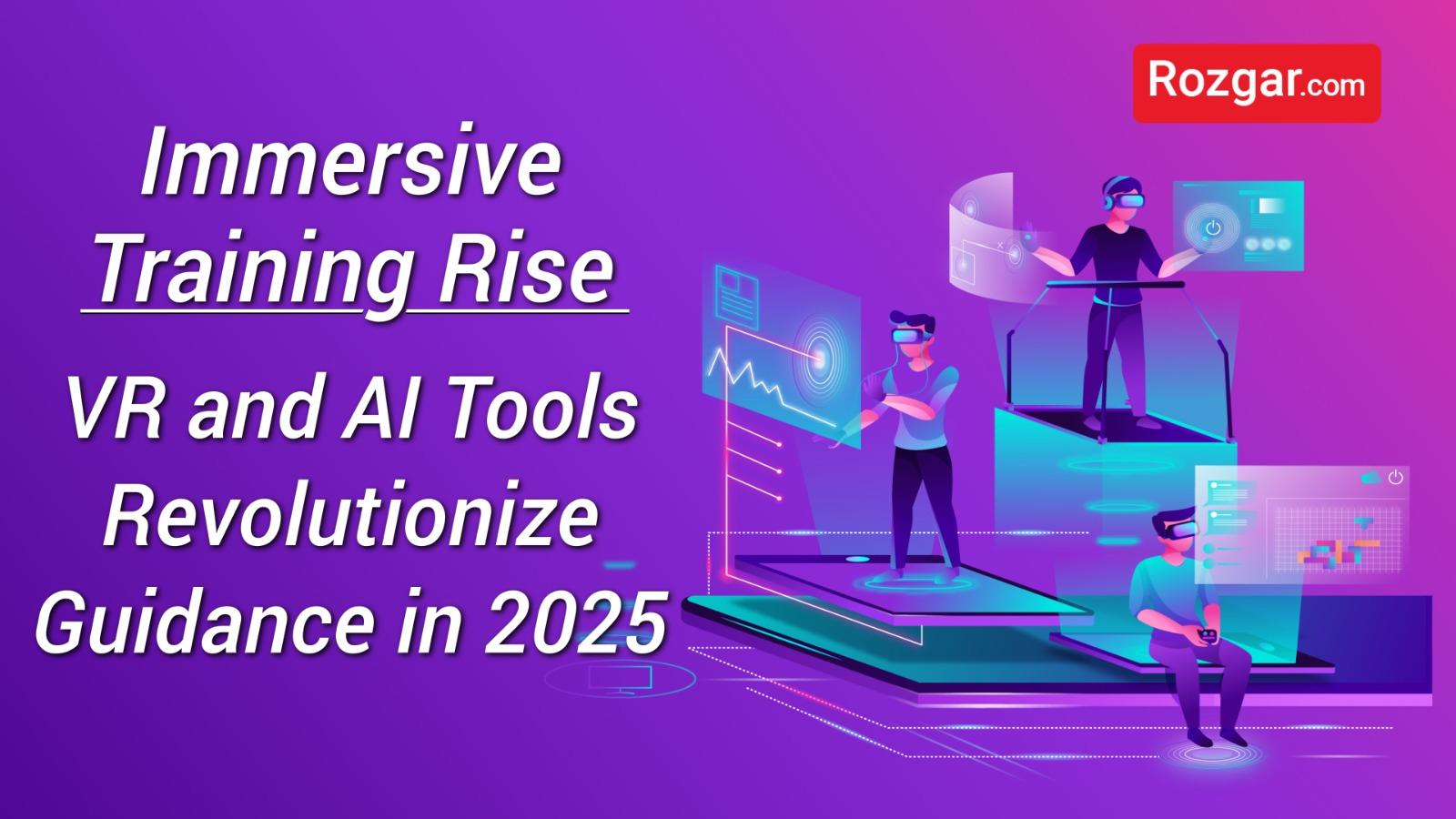
In 2025, the way people learn and develop workplace skills has evolved from passive content consumption to active, experience-driven practice. Traditional training based on slides, videos, and classroom sessions is now being redefined by immersive learning environments powered by Virtual Reality (VR),Augmented Reality (AR), and Artificial Intelligence(AI).
These technologies create realistic simulations,personalized coaching, and measurable outcomes, bridging the gap between training and real-world job performance.
What is Immersive Learning and Why 2025 is the Tipping Point?
Immersive learning places learners inside a simulated environment—a 3D virtual space where they perform realistic tasks, make decisions, and receive instant feedback.
This includes:
VR simulations replicating real workplaces (factories, hospitals, sales showrooms).
AR overlays guiding real-time tasks.
AI-driven virtual agents role-playing as customers, patients, or colleagues.
Why 2025 is the Turning Point
Affordable Hardware: Lightweight VR headsets and AR tools are now mainstream.
Smarter AI: Natural language, avatar realism, and adaptive algorithms make personalized training possible.
Skill Urgency: Automation demands faster learning of complex, domain-specific skills.
How VR Career Tools and AI Combine for Smarter Training
VR career tools create real-world simulations, while AI acts as a coach, analyzing behavior and adapting scenarios.
Key Features:
Scenario Generation: AI builds unpredictable challenges to enhance judgment.
Real-Time Feedback: Speech and action analysis provide instant improvement cues.
Personalized Learning Paths: Training adapts to each learner’s performance.
Behavioral Coaching: AI-driven avatars teach empathy, negotiation, and leadership.
Together, VR and AI transform training from one-size-fits-all to personalized mentorship at scale.
Top Use Cases for Immersive Learning
1.High-Stakes Professions
Surgeons rehearse rare operations using haptic VR tools.
Pilots train for emergency situations and complex weather conditions.
2.Industrial and Technical Training
Maintenance workers use AR to perform accurate repairs.
VR onboarding reduces factory accidents and training time.
3.Sales and Customer Experience
Sales teams practice pitches with AI-driven customer avatars.
Retail staff handle simulated customer complaints for confidence building.
4.Leadership & DEI Training
Managers practice coaching and feedback with emotional avatars.
DEI modules help employees identify unconscious bias.
5.Career Exploration and Onboarding
Candidates experience job tasks virtually, improving recruitment accuracy.
Why Immersive Learning Works
Active Learning: Learners retain more through “doing.”
Safe Failure: Practice without real-world risks.
Higher Retention: Spaced repetition and personalized refreshers.
Better Engagement: No more passive slides—immersive learning keeps attention high.
Real-World Success Stories
Healthcare: Faster triage response and teamwork during emergencies.
Manufacturing: Reduced repair errors and faster onboarding.
Sales:30–40% improvement in pitch success rates.
Consulting: Improved communication and client satisfaction.
How to Implement Immersive Learning in Your Organization
Start with Outcomes: Identify metrics like reduced error rates or faster onboarding.
Run Pilot Programs: Test in high-impact areas (safety, sales, operations).
Blend with Microlearning: Use VR/AR alongside coaching and short courses.
Leverage AI Feedback: Analyze patterns and personalize training.
Train Managers: Ensure leaders can translate training insights into real-world behavior.
Measure Results: Track retention, performance, and ROI before scaling up.
Overcoming Common Barriers
Cost Concerns: Begin with small pilots and scale gradually.
Resistance to Change: Educate teams about the benefits.
Data Privacy: Use secure, ethical AI data practices.
Accessibility: Design inclusive experiences for all learners.
How to Measure Success
Track metrics such as:
Time-to-proficiency
Error reduction rates
Engagement and completion levels
Transfer of skills to real-world performance
ROI through productivity gains and reduced training costs
Preparing Learners for Immersive Training
Practice actively: Participate; don’t just observe.
Use feedback loops: Turn AI suggestions into habits.
Reflect: Connect simulation lessons to job scenarios.
Ethical Design in Immersive Learning
Prevent AI bias in avatars and responses.
Ensure psychological safety for all participants.
Protect learner data privacy.
Build inclusive, accessible simulations for everyone.
The Future of Immersive Learning
Expect the rise of:
Mixed Reality Collaboration: Real-world and virtual teamwork combined.
Federated Learning Models: Shared anonymized skill data across organizations.
Micro-Practice Moments: Short VR drills before meetings or critical tasks.
Immersive learning is evolving from occasional workshops to continuous, embedded skill-building—reshaping how we learn, grow, and lead in the workplace.
| Latest Category Jobs | ||
|---|---|---|
| Job Information | Apply Job | |
AI/ML(5-9 years) | ||
SAP EAM Consultant(5-13 years) | ||
Application Architect: SAP Commerce(12-14 years) | ||
Senior Software Engineer(3-5 years) | ||
Pega Position /UST(4-5 years) | ||
Office-Management-Jobs(1-2 years) | ||
Conclusion
By 2025, immersive learning—driven by VR career tools and AI—has matured from novelty to necessity. It enables realistic practice, accelerates skill building, and closes the gap between learning and performance. Organizations that adopt immersive strategies strategically will outpace competitors in safety, productivity, and talent development. Individuals who embrace immersive practice will develop resilient, transferable skills that matter in an increasingly complex workplace.
Training is no longer merely about knowledge transfer; it is about cultivating judgment, muscle memory, and human connection in contexts technology increasingly controls. Immersive learning gives learners that practice at scale—safely, measurably, and effectively.
Frequently Asked Questions
Create Your Free Job Alert
Related Posts
View Allबिहार में सत्ता परिवर्तन: जॉ...
बिहार की राजनीति में संभावित सत्ता परिवर्तन को लेकर चर्चा तेज हो गई है। नए नेतृत्व के आने की अटकलों के बीच सबसे बड़ा सवाल यह है कि इसका असर राज्य के जॉब मार्केट और एजुकेशन सेक्टर पर किस तरह पड़ेगा। युवाओं, छात्रों और नौकरी की तैयारी कर रहे उम्मीदव...
read more Yogesh Singh 02 Apr, 2026
Haryana Jobs 2026: 800 एकड़ ...
हरियाणा में रोजगार को लेकर एक बड़ी खुशखबरी सामने आई है। देश की प्रमुख ऑटोमोबाइल कंपनी Maruti Suzuki राज्य में 800 एकड़ में अपना नया मेगा प्लांट स्थापित करने जा रही है। इस प्रोजेक्ट के शुरू होने से न केवल औद्योगिक विकास को बढ़ावा मिलेगा, बल्कि हजार...
read more Yogesh Singh 01 Apr, 2026पंजाब रोजगार समाचार 2026: नई...
पंजाब के युवाओं के लिए साल 2026 रोजगार और करियर के नए अवसर लेकर आया है। राज्य सरकार और विभिन्न विभागों द्वारा नई भर्तियां और रोजगार योजनाएं शुरू की जा रही हैं, जिससे लाखों युव...
read more Yogesh Singh 23 Mar, 2026