
In a crowded marketplace, great products and services only get noticed when their stories are told well. Advertisement writing sits at the intersection of creativity and strategy, it’s where copywriting meets marketing strategy to turn attention into action. Whether you’re crafting a single-line social ad, designing a multi-touch digital campaign, or writing a TV spot, mastering the principles of advertising ensures your message lands, resonates, and converts.
This long-form guide will walk you through the full playbook: what advertisement writing really means, the formats that work, the copywriting techniques that convert, how to align ads with a marketing strategy, measurement and optimization, and where the future of advertising is headed. Along the way you’ll pick up practical templates, examples, and a handy checklist so you can produce high-performing advertising every time. We’ll also weave in three extra focus keywords — branding, digital marketing, and persuasive writing so you have a complete toolkit for modern campaign work.
What is an Advertisement (and why precision matters)
An advertisement is any paid message designed to persuade an audience to take a particular action, buy, sign up, visit, or even change perception. Advertising isn’t simply creative copy or pretty visuals; it’s a strategic signal that needs to be intentional about audience, timing, format, and outcome. Great advertising happens when you combine a sharp marketing strategy with persuasive writing and coherent brand expression.
Think of advertising as a conversation starter with measurable goals. Without clear objectives and a defined audience, even the most dazzling ad will underperform. Good advertisement writing begins with knowing exactly who you’re talking to and what change in behavior you want.
The core components of effective advertising
Every strong ad, across any medium, contains these essential parts:
Headline / Hook — grabs attention within milliseconds. This is the shortest path to curiosity.
Value Proposition — what’s in it for the audience? Benefits over features.
Proof / Credibility — social proof, testimonials, data, or brand heritage that builds trust.
Offer / CTA (Call-to-Action) — A clear, direct next step the reader can take.
Visuals Design — Imagery, layout, and typography that support and amplify the message.
Tone & Voice — consistent with branding and the emotional positioning of the product.
The headline is non-negotiable; if it fails, few people read the rest. The CTA is equally crucial, without it, advertising is merely noise.
Advertising formats — choose the right one for your goal
Different goals and audiences demand different advertising formats. Here’s a practical list with strengths and use cases:
1. Banner & Display Ads (Web): Great for awareness and retargeting. Keep copy short, visual strong.
2. Search Ads (SEM): Intent-driven; use tightly aligned headlines and keyword-rich CTA.
3. Social Media Ads (Carousel, Stories, Reels): Highly visual; ideal for brand storytelling and short funnels.
4. Video Ads (Pre-roll, Facebook/YouTube): Best for emotional storytelling and product demos.
5. Native Ads / Sponsored Content: Blend with editorial for softer persuasion and longer form.
6. Email Ads & Newsletters: Direct, high-ROI; works well for nurturing and promotions.
7. Print & Outdoor (OOH): High frequency & local presence; messages must be concise and visual.
8. Audio Ads (Podcasts, Radio): Trust-building and reach; rely on narrative and voice.
9. Programmatic & RTB: Scale-driven, uses data to target highly specific audiences.
10. Influencer Partnerships: Social proof and authenticity, often used for awareness and consideration.
Selecting a format requires matching audience behavior with your campaign
objective, reach, engage, convert, or retain.
How to Align Advertising with Marketing Strategy
Advertising doesn’t operate in a vacuum. Integrate your ad plan with your broader marketing strategy by following these steps:
Define the objective— awareness, consideration, activation, retention, or advocacy.
Pinpoint the audience— segment by demographics, psychographics, intent signals, and customer journey stage.
Map customer journey— determine which ad formats serve each stage (e.g., video for awareness, search for intent).
Craft the messaging hierarchy— high-level brand message for long-term positioning, tactical offer messaging for short-term conversions.
Set KPIs— CTR, conversion rate, CPL (cost per lead), ROAS (return on ad spend), and lifetime value.
Plan media & budget— allocate based on expected returns and fading funnels (awareness vs. conversion).
Test, measure, and iterate— use A/B testing and analytics to refine creative and placements.
A sound marketing strategy establishes context: the advertisement becomes a lever of a larger engine, not a one-off stunt.
For more insights on career growth and marketing opportunities, explore Rozgar.com
Copywriting Frameworks that Work (AIDA, PAS, FAB, and More)
Use proven copy structures to speed up craft and improve impact.
AIDA (Attention → Interest → Desire → Action)
Attention— the headline hooks.
Interest— an opening sentence or visual that promises value.
Desire— features turned into benefits and emotions.
Action— a specific CTA.
PAS (Problem → Agitate → Solve)
Good for problem-aware audiences. Agitating the pain point makes the solution feel urgent.
FAB (Features → Advantages → Benefits)
Focuses on translating product specifications into customer value.
4Us (Useful, Urgent, Unique, Ultra-specific)
Great for direct-response ads; push specificity and immediate benefit.
Before-After-Bridge
Paints the transformation your product provides — “before” is the pain, “after” the outcome, “bridge” is your product.
Mix these frameworks depending on the format and objective. For example, social ads may rely on PAS for short conversions, while long-form native content benefits from Before-After-Bridge storytelling.
Headline and Opening Line Playbook
Headlines account for ~80% of ad engagement in many formats. Follow these headline strategies:
Use numbers: “7 ways to improve X.”
Ask a provocative question: “Tired of X?”
Offer a clear benefit: “Save 30% on…
Create curiosity: “What no one tells you about X…”
Use urgency: “Today only: …
Make it personal: “For busy parents who want…”
Keep the opening line as a promise that answers:“Why should I keep reading?”In digital ads, your headline and the first visual frame must carry the message even on mute autoplay.
Persuasive Writing Techniques: Words that Convert
Effective persuasive writing uses emotional triggers and cognitive drivers:
Social proof:“Trusted by 100K companies.”
Scarcity & urgency: “Limited seats.”
Authority: “Endorsed by Dr. X.
Reciprocity: Free helpful content builds goodwill
Simplicity: Short sentences and plain language win, avoid jargon.
Active voice: “Get results” beats “Results are achieved.”
Concrete claims: Numbers and specifics beat vague promises.
Language must be matched to brand voice: a luxury brand uses aspirational language; a fintech app uses clear, reassuring phrases.
Visuals and Layout — Design that Sells
Copy and design should be inseparable. Visual tips that elevate advertising
Use hierarchy: Headline, subhead, body, CTA — visually distinct.
Whitespace matters: Clean layouts increase comprehension.
Color psychology: Colors evoke emotion and brand signals.
Imagery with intent: Use images that reflect your audience, not just stock clichés.
Mobile-first design: Majority of ad impressions are mobile; optimize legibility and loading times.
If your ad relies on visuals more than text (e.g., outdoor or Instagram), the imagery must communicate the headline’s promise without words.
Calls-to-Action (CTAs) that actually work
A CTA is an instruction, but effective CTAs are motivating. Best practices:
- Keep it specific: “Claim your 20% off” vs. “Click here.”
- Position for friction: Place early for low-effort conversions (newsletter), later for high-consideration offers (webinar).
- Use action verbs: Get, Claim, Start, Save, Join.
- Add urgency or value: “Register free, seats limited.”
- Test variants: Colors, wording, and placement all affect conversion rates.
- Your CTA should remove ambiguity: the audience must know exactly what happens after they click.
For career opportunities and job alerts, explore Rozgar.com
Testing and optimization — the advertiser’s daily routine
Testing is non-negotiable. Adopt a culture of constant experimentation:
A/B test headlines and CTAs — isolate one variable at a time.
Multivariate testing — for mature campaigns to test layout, copy, and visuals together.
Audience segmentation tests — compare creative performance across cohorts.
Landing page experiments — align ad promise to landing experience; mismatch kills conversions.
Performance cadence — give tests sufficient sample size; observe over seasonality.
Use learning to prune losing variations and scale winners. The ROI from continuous optimization often dwarfs the impact of production-level creative.
Measurement & KPIs — what to track by objective
- Awareness: impressions, reach, view-through rate (VTR).
- Consideration: CTR, time on content, engagement rate.
- Conversion: conversion rate, cost per acquisition (CPA), ROAS.
- Retention & Loyalty: repeat purchase rate, LTV, churn.
- Brand health: brand lift studies, search uplift, net promoter score (NPS).
- Always connect ad metrics to business outcomes to justify spend and guide strategy.
Budgeting & media planning — where to spend
A simple media mix framework:
70/20/10 Rule: 70% on proven channels, 20% on optimization, 10% on experimentation.
Funnel allocation: Invest in upper funnel to feed lower funnel; don’t only chase immediate conversions.
Seasonality planning: Increase investments around peak buying moments.
Attribution models: Use multi-touch attribution where possible to credit campaign impact fairly.
Efficient media planning maximizes reach while protecting for diminishing CPMs and ad fatigue.
Digital marketing integration: search, social, and programmatic
Modern advertising must integrate with broader digital marketing efforts:
Search fills demand; ads should match user intent.
Social builds awareness and community; use retargeting to convert.
Programmatic scales performance with data signals.
SEO & content amplify organic reach and reduce dependence on paid channels.
Email & CRM convert and retain—ads should feed the CRM with clean leads.
A unified data layer and cross-channel attribution makes optimization smarter.
Legal, privacy, and ethical considerations
Advertising must respect laws and platform policies:
Truth-in-advertising: Don’t mislead claims; substantiate performance claims.
Data privacy: Comply with GDPR, CCPA, and local privacy laws in targeting and data handling.
Platform policies: Ads violating policy (health claims, financial promises, discriminatory content) get pulled.
Inclusive representation: Avoid stereotyping and ensure diverse representation in visuals and messaging.
Ethical advertising builds long-term brand equity; compliance avoids costly penalties and reputation damage.
Internationalization & localization
Going global? Don’t copy-paste campaigns. Localize:
Translate more than words—adapt cultural references and imagery.
Adjust offers for regional pricing and availability.
Consider local channels and consumer behaviors (e.g., messaging apps popular in certain markets).
Local regulatory constraints must be checked for claims, endorsements, and data use.
Localized advertising shows respect and increases effectiveness.
Future trends: AI, interactive ads, and immersive experiences
The future of advertising will be powered by technology:
AI-assisted copy & creative generation: speeds ideation and personalization.
Dynamic creative optimization (DCO): tailor ad variants in real-time to audiences.
Interactive formats: shoppable video, AR experiences, and gamified ads that engage users.
Privacy-first targeting: cookieless strategies and first-party data will define targeting.
Sustainability messaging: purpose-driven brands will use advertising to demonstrate impact responsibly.
Advertisers who learn to merge data, creativity, and ethics will lead.
Mini case studies (three quick wins)
Local Cafe — social carousel + CTA: Short story carousel of “farm to cup” increased footfall by 23% using geo-targeted promos.
SaaS Launch — search + demo CTAs: Tight keyword mapping and a free-demo CTA halved CPL and accelerated MQL-to-SQL conversion.
D2C Brand — influencer + retargeting: Micro-influencer authenticity drove TACOS (total ad cost of sale) improvements and repeat purchases.
Each success began with a clear objective, focused audience, and iterative testing.
Advertisement writing checklist (ready-to-use)
Define objective & target audience.
Select format & channel.
Draft 3–5 headline variants.
Write benefit-led body copy vs. features
Add credibility (numbers, testimonials).
Create 2 CTA variations.
Choose visuals aligned to audience.
A/B test headline & CTA first.
Ensure landing page matches ad promise.
Track KPIs and schedule optimization cadence.
Use this checklist every campaign to avoid costly misses
| Latest Category Jobs | ||
|---|---|---|
| Job Information | Apply Job | |
Instructional Designer(10-12 years) | ||
Content Development Senior Analyst(5-8 years) | ||
Virtual Walk-in ||Resume Writing(0-4 years) | ||
Content Strategist(8-12 years) | ||
Video Content Specialist(4-8 years) | ||
Digital Content Management Analyst(3-5 years) | ||
Conclusion
To master advertisement writing you need both craft and process.
Creative intuition wins attention
Strategic discipline turns attention into measurable outcomes.
Pair tight, persuasive copy with a coherent marketing strategy.
Test relentlessly, respect legal and ethical boundaries, and keep the brand voice consistent.
Whether your channel is a billboard or a TikTok reel, these principles will help you create advertising that not only gets noticed but drives growth.
Create Your Free Job Alert
Related Posts
View All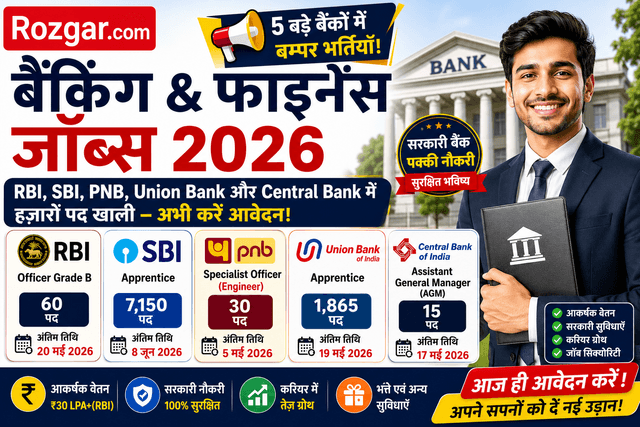
Banking & Finance Jobs 2026 ...
Jobs 2026 – RBI, SBI, PNB, Union Bank और Central Bank में बड़ी भर्तियाँ
RBI, SBI, PNB, Union Bank of IndiaऔरCentral Bank of India— इन पाँचों में मिलाकर हज़ारों पद खाली हैं। Assistant General Manager से लेक...
read more Ayush Yadav 04 Jun, 2026
हरियाणा सरकार का बड़ा फैसला:...
हरियाणा सरकार ने युवाओं के भविष्य को मजबूत करने की दिशा में एक बड़ा और अहम फैसला लिया है। राज्य कैबिनेट ने पूर्व अग्निवीरों (Ex-Agniveers) को सरकारी नौकरियों में आरक्षण देने का ऐलान किया है। यह फैसला न केवल अग्निवीर योजना के तहत सेवा दे चुके युवाओ...
read more Yogesh Singh 10 Apr, 2026राजस्थान में नौकरियों की बहा...
राजस्थान में सरकारी नौकरी की तैयारी कर रहे युवाओं के लिए साल 2026 बेहद खास साबित हो रहा है। राज्य सरकार ने बड़े स्तर पर भर्तियों का ऐलान किया है, जिससे लाखों उम्मीदवारों को रोजगार के नए अवसर मिलने वाले हैं।
क्या है लेटेस्ट जॉब अपडेट...
read more Yogesh Singh 08 Apr, 2026