
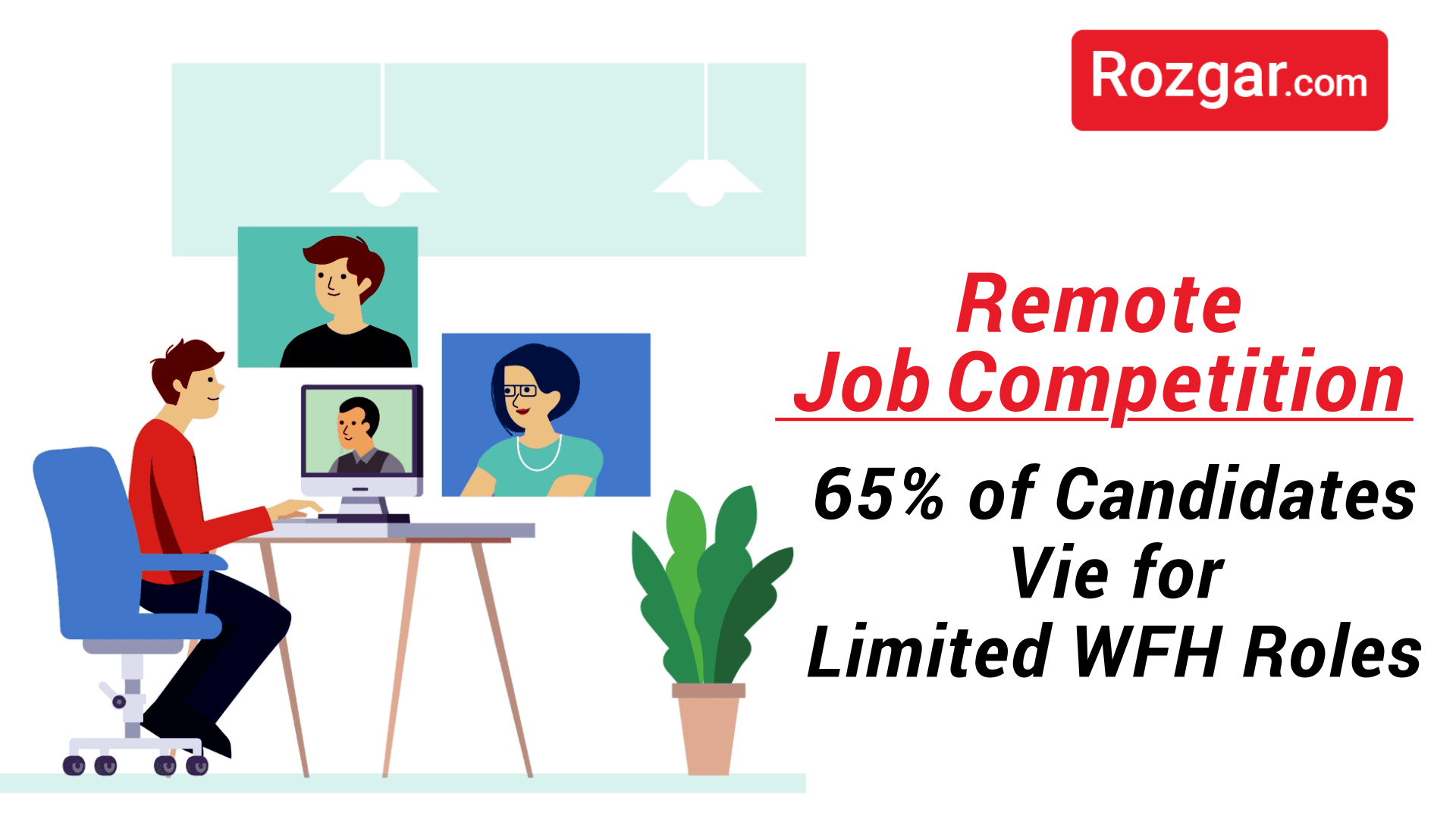
The remote work revolution has reshaped the way we think about careers, productivity, and even geography. But as 2025 unfolds, a new challenge has emerged —the race for remote roles is tighter than ever.
According to recent data, nearly 65% of candidates are competing for a limited number of Work-From-Home opportunities, intensifying the hiring battlefield. What started as a pandemic necessity has now evolved into a lifestyle demand and employers are struggling to balance flexibility with business needs.
This growing Remote Job Demand is transforming hiring strategies, talent expectations, and even how professionals define “a good job.”
The Shift: From Perk to Priority
A few years ago, the ability to Work-From-Home was considered a perk — a nice-to-have benefit reserved for select roles. In 2025, it has become one of the most sought-after job features, right next to salary and career growth.
Candidates are now filtering job searches specifically for remote or hybrid roles. Platforms like LinkedIn, Indeed, and Naukri have reported record searches for “Remote” and “WFH” filters.
Why the surge? Because Remote Job Demand represents more than just convenience — it’s about freedom, flexibility, and control.
Employees have realized that remote work allows them to:
- Save commute time and costs
- Manage personal and professional life better
- Explore roles outside their city or even country
- Focus more on outcomes than office presence
For many, remote work isn’t just a benefit anymore; it’s a requirement.
Why Remote Job Demand Is Outpacing Supply
Despite employees’ growing interest, companies are becoming cautious. While Work-From-Home arrangements proved successful during the pandemic, some industries found them challenging for collaboration, data security, or creativity.
This has created a gap —high demand but limited supply.
Let’s break it down:
1. Return-to-office policies: Many organizations are slowly reintroducing hybrid or full-office models.
2. Performance concerns: Some managers believe remote teams lack the same synergy as in-office teams.
3. Regulatory or security barriers: Certain sectors, like finance or healthcare, require secure systems that are harder to manage remotely.
4. Company culture: Leadership in traditional firms still values in-person presence for mentorship and engagement.
So, while the Remote Job Demand skyrockets, the number of actual openings hasn’t kept pace.
The Candidate’s Challenge: Standing Out in a Remote-First World
With 65% of candidates eyeing a limited pool of remote roles, the question becomes — how do you differentiate yourself?
Here are a few proven strategies:
1. Show remote readiness: Highlight skills like time management, communication, and self-discipline on your resume.
2. Leverage tech proficiency: Employers prefer candidates comfortable with digital collaboration tools like Slack, Zoom, and Asana.
3. Show outcomes, not hours: Focus on achievements that demonstrate your ability to deliver results independently.
4. Build your online presence: A strong LinkedIn profile and professional portfolio signal reliability and accountability.
In short — in a crowded field, your ability to prove you’re “remote-ready” can make all the difference.
Employer Perspective: Balancing Flexibility and Productivity
Employers, too, face their share of challenges. While remote work expands the talent pool globally, it also introduces new complexities — managing performance, sustaining engagement, and maintaining company culture.
To attract top candidates amid rising Remote Job Demand, companies are evolving their approach:
- Hybrid models: Offering 2–3 days of WFH as a middle ground.
- Flexible hours: Allowing employees to choose when they work, as long as results are delivered.
- Remote infrastructure investment: Providing secure systems, digital collaboration tools, and ergonomic support for home offices.
- Outcome-based metrics: Measuring performance by impact, not presence.
The organizations that adapt to this mindset are the ones winning the talent game in 2025.
The Human Side of the Remote Work Revolution
Beyond productivity metrics and policies, there’s a deeply human story behind the Work-From-Home movement.
Employees aren’t just chasing convenience — they’re chasing balance. The ability to pick up their children from school, care for aging parents, or simply avoid long, draining commutes has redefined what “a good job” feels like.
The mental health benefits are undeniable, too. Studies show employees working remotely report lower stress levels and higher job satisfaction — provided there’s clear communication and support from management.
So, Remote Job Demand isn’t just about where people work; it’s about how they live.
The Global Impact: Remote Work Knows No Borders
Another fascinating development is how remote work has globalized job opportunities. A designer in Delhi can now work for a startup in Berlin. A data analyst in Manila can collaborate with a team in Toronto.
This has blurred geographical boundaries — but also intensified global competition. Companies can now hire the best talent anywhere, while candidates must compete on skills, adaptability, and professionalism, not location.
In 2025, success in Work-From-Home careers will depend on your ability to:
- Stay visible online (through networking and personal branding).
- Continuously upskill in digital collaboration and remote tools.
- Maintain accountability and communication across time zones.
The Road Ahead: What’s Next for Remote Job Demand
The surge in Remote Job Demand isn’t likely to fade anytime soon. Instead, we’ll see an evolution — from temporary flexibility to strategic flexibility.
Predictions for 2025 and beyond include:
- Rise of remote-first organizations that build culture entirely online.
- AI-assisted productivity tools to improve collaboration and reduce burnout.
- Global hiring ecosystems where talent, not geography, defines opportunity.
- Performance-based pay models that reward output, not attendance.
The future of work won’t be fully remote or fully in-office, it’ll be a customized mix that fits different roles, industries, and lifestyles.
Practical Tips for Job Seekers in the Remote Work Era
1. Be realistic: Not every job can be done remotely — target roles that naturally align with WFH setups.
2. Tailor your resume: Mention prior remote experiences, tools used, and measurable results.
3. Stay proactive: Apply early and follow up; competition is fierce.
4. Learn continuously: Upskill in remote communication, cybersecurity, or project management.
5. Prioritize companies with transparent policies: Know their stance on flexibility before applying.
| Latest Category Jobs | ||
|---|---|---|
| Job Information | Apply Job | |
Database Administrator(12-20 years) | ||
QA Engineer(6-8 years) | ||
Senior Test Lead(2-5 years) | ||
Tech Lead (.NET)(9-12 years) | ||
Capital Project Manager(10-15 years) | ||
Sales Pursuit Management(15-20 years) | ||
Conclusion
The race for Work-From-Home positions reflects a deeper transformation in how we view success and satisfaction at work. As Remote Job Demand continues to grow, both candidates and employers must adapt — focusing less on where work happens and more on how well it’s done.
In the end, the winners in this new era will be those who embrace change, prioritize balance, and stay ahead of the evolving definition of work itself.
For more such updates, follow Rozgar.com.
Frequently Asked Questions
Create Your Free Job Alert
Related Posts
View All
Banking & Finance Jobs 2026 ...
Jobs 2026 – RBI, SBI, PNB, Union Bank और Central Bank में बड़ी भर्तियाँ
RBI, SBI, PNB, Union Bank of IndiaऔरCentral Bank of India— इन पाँचों में मिलाकर हज़ारों पद खाली हैं। Assistant General Manager से लेक...
read more Ayush Yadav 04 Jun, 2026
हरियाणा सरकार का बड़ा फैसला:...
हरियाणा सरकार ने युवाओं के भविष्य को मजबूत करने की दिशा में एक बड़ा और अहम फैसला लिया है। राज्य कैबिनेट ने पूर्व अग्निवीरों (Ex-Agniveers) को सरकारी नौकरियों में आरक्षण देने का ऐलान किया है। यह फैसला न केवल अग्निवीर योजना के तहत सेवा दे चुके युवाओ...
read more Yogesh Singh 10 Apr, 2026राजस्थान में नौकरियों की बहा...
राजस्थान में सरकारी नौकरी की तैयारी कर रहे युवाओं के लिए साल 2026 बेहद खास साबित हो रहा है। राज्य सरकार ने बड़े स्तर पर भर्तियों का ऐलान किया है, जिससे लाखों उम्मीदवारों को रोजगार के नए अवसर मिलने वाले हैं।
क्या है लेटेस्ट जॉब अपडेट...
read more Yogesh Singh 08 Apr, 2026