
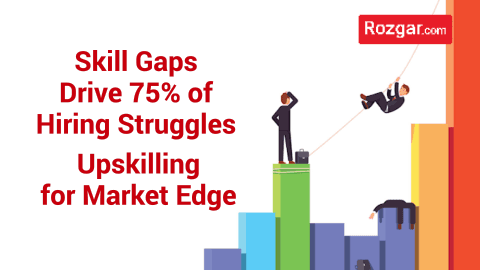
In today’s fast-evolving job landscape, hiring the right talent has become one of the toughest challenges for organizations. Studies suggest that over 75% of hiring struggles are directly linked to skill gaps, not the lack of available candidates. This means the people are out there — but the right skills aren’t.
As industries digitize, automate, and innovate, the pace of change is leaving traditional skill sets behind. The result? A widening skill gapthat fuels talent shortages and stifles growth across sectors.
But there’s good news: this challenge also presents a golden opportunity. Organizations that invest in upskilling and reskilling are not just surviving the talent crisis — they’re thriving with a sharper market edge.
Understanding the Skill Gap Crisis
A skill gap occurs when the skills employees have don’t match what employers need.
For instance, a company may need data analysts skilled in AI-driven analytics, but most available candidates only understand basic spreadsheet reporting.
The issue isn’t limited to tech — every sector, from healthcare and manufacturing to marketing and logistics, is experiencing it.
According to LinkedIn’s 2024 Workplace Learning Report, nearly60% of companies say they can’t find candidates with the right skills, even when job seekers are actively applying. This mismatch causes longer hiring times, higher recruitment costs, and increased employee turnover — all because of widening skill gaps.
How Skill Gaps Create Talent Shortages
Many organizations think talent shortages mean there aren’t enough people in the job market.
But in reality, it’s not about the quantity — it’s about the quality and relevance of talent.
Here’s how skill gaps drive talent shortages:
1. Technological Disruption -Emerging technologies like AI, automation, and machine learning are creating new roles faster than people can train for them.
2. Evolving Job Roles -Traditional job descriptions no longer fit modern business needs. Marketers now need data analytics skills, HR professionals need digital tools, and engineers need coding expertise.
3. Education-Industry Disconnect -Academic curriculums often lag behind industry demands. Graduates may hold degrees but lack practical, job-ready skills.
4. Lack of Continuous Learning - Many employees stop learning after landing a job. Without ongoing upskilling, their skill sets become outdated in just a few years.
The result is an alarming cycle companies can’t find skilled people, and people can’t find relevant jobs.
The Real Cost of Skill Gaps for Businesses
Skill gaps don’t just make hiring difficult; they impact the entire business ecosystem:
Reduced Productivity: Employees spend more time learning on the job than performing effectively.
Increased Recruitment Costs: Companies are forced to offer higher salaries to attract limited skilled talent.
·Project Delays: Critical projects get postponed due to lack of expertise.
·Employee Burnout: Overloaded skilled employees bear extra responsibilities.
·Lower Innovation: Teams without the right skills struggle to adapt and innovate.
In fact, Deloitte’s research shows that companies with large skill gaps experience29% lower productivityand21% slower growth compared to skill-ready competitors.
Upskilling: The Most Effective Antidote to Skill Gaps
The solution doesn’t always lie in hiring new talent — sometimes, it’s about upgrading the existing one.
Upskilling — the process of training employees with new and advanced skills — helps bridge the skill gap internally and ensures workforce relevance.
Here’s how upskilling delivers a competitive market edge:
1. Future-Proofs the Workforce -When employees are trained for emerging technologies, companies stay ahead of industry shifts.
2. Improves Retention -Employees feel valued when organizations invest in their growth, reducing attrition rates.
3. Boosts Productivity -Skilled employees perform tasks faster, smarter, and with greater confidence.
4. Enhances Employer Brand -A learning-driven culture attracts ambitious talent looking for career growth.
5. Reduces Hiring Costs -Upskilling existing employees is often cheaper and faster than hiring new ones.
How Companies Can Bridge the Skill Gap
To overcome talent shortages and thrive in a skill-driven economy, companies can adopt a proactive approach:
1. Conduct Skill Gap Assessments
Regularly evaluate your workforce’s current skills versus what’s needed for future projects. Identify critical gaps and prioritize learning initiatives accordingly.
2. Invest in Learning and Development (L&D)
Create structured L&D programs usinge-learning platforms, mentorship, and microlearning modules. Encourage employees to complete certifications relevant to their roles.
3. Promote Continuous Learning
Incorporate a “learning-first” culture. Encourage curiosity, experimentation, and knowledge sharing.
4. Collaborate with Educational Institutions
Partner with universities, edtech platforms, and skill academies to co-develop courses that align with real-world needs.
5. Measure ROI of Upskilling
Track metrics such as productivity, retention, and employee satisfaction post-training to understand the tangible impact of your upskilling initiatives.
The Role of Leadership in Closing Skill Gaps
Leaders play a pivotal role in bridging the skill divide. By championing continuous learning and providing access to skill-building resources, leadership can create a resilient, future-ready workforce.
Forward-thinking leaders don’t view upskilling as a cost — they see it as along-term investment that drives innovation, employee engagement, and organizational agility.
As one HR leader famously said ,“What if we train them and they leave? What if we don’t and they stay?”
The Future: Skill-First Hiring and Human Potential
The hiring landscape is shifting from degree-based to skill-based recruitment. Organizations are now prioritizing what candidates can do over what certificates they hold.
A skill-first culture not only helps fill current gaps but also builds adaptability for future roles that don’t yet exist. As AI and automation evolve, human skills — creativity, problem-solving, emotional intelligence — will define the next generation of talent success. Companies that focus on upskilling today will be the ones leading industries tomorrow.
| Latest Category Jobs | ||
|---|---|---|
| Job Information | Apply Job | |
Microsoft Dynamics Professional - D365 ERP / CRM (Technical/Functional)(4-20 years) | ||
Technical Manager - TPM(9-14 years) | ||
System Test Developer(3-6 years) | ||
SailPoint Architect(10-12 years) | ||
Finance Shared Services(6-8 years) | ||
Kinaxis(12-15 years) | ||
Conclusion
The conversation around skill gaps isn’t just about hiring — it’s about evolving. Businesses that embrace upskilling as a core strategy are better prepared for disruptions, more attractive to talent, and significantly more competitive in the marketplace. In a world of constant change, learning isn’t just an advantage — it’s survival. And the organizations that understand this will always hold the market edge.
Frequently Asked Questions
Create Your Free Job Alert
Related Posts
View All
Banking & Finance Jobs 2026 ...
Jobs 2026 – RBI, SBI, PNB, Union Bank और Central Bank में बड़ी भर्तियाँ
RBI, SBI, PNB, Union Bank of IndiaऔरCentral Bank of India— इन पाँचों में मिलाकर हज़ारों पद खाली हैं। Assistant General Manager से लेक...
read more Ayush Yadav 04 Jun, 2026
हरियाणा सरकार का बड़ा फैसला:...
हरियाणा सरकार ने युवाओं के भविष्य को मजबूत करने की दिशा में एक बड़ा और अहम फैसला लिया है। राज्य कैबिनेट ने पूर्व अग्निवीरों (Ex-Agniveers) को सरकारी नौकरियों में आरक्षण देने का ऐलान किया है। यह फैसला न केवल अग्निवीर योजना के तहत सेवा दे चुके युवाओ...
read more Yogesh Singh 10 Apr, 2026राजस्थान में नौकरियों की बहा...
राजस्थान में सरकारी नौकरी की तैयारी कर रहे युवाओं के लिए साल 2026 बेहद खास साबित हो रहा है। राज्य सरकार ने बड़े स्तर पर भर्तियों का ऐलान किया है, जिससे लाखों उम्मीदवारों को रोजगार के नए अवसर मिलने वाले हैं।
क्या है लेटेस्ट जॉब अपडेट...
read more Yogesh Singh 08 Apr, 2026