
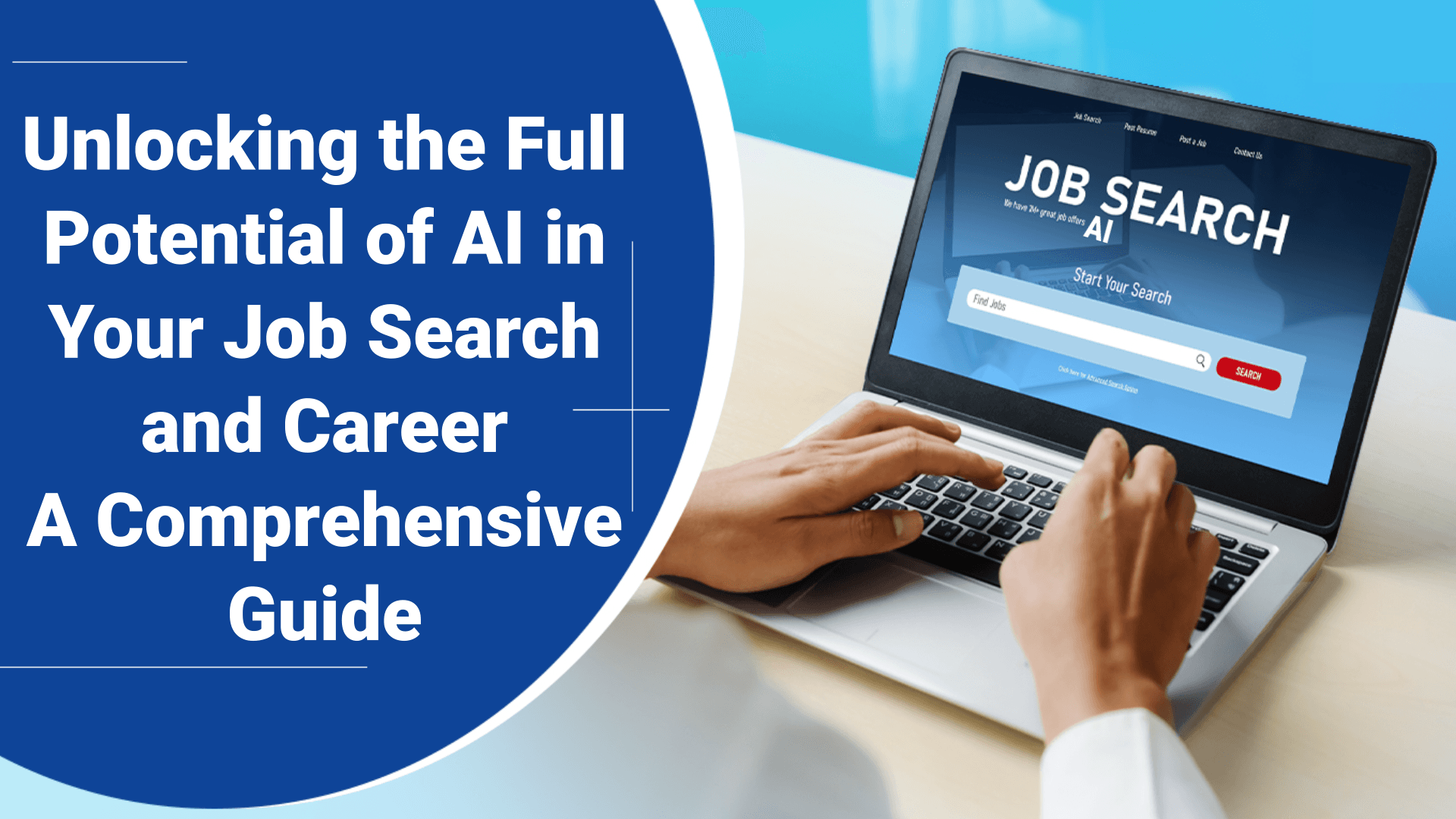
As the job market continues to evolve at an unprecedented pace, Artificial Intelligence (AI) has moved from a futuristic concept to a fundamental part of the recruitment and professional landscape. For job seekers and career builders, understanding and leveraging AI is no longer optional—its a critical strategy for success. This comprehensive guide will equip you with the knowledge and tools to harness the power of AI, not just to find a job, but to build a thriving career.
1. Leveraging AI for an Enhanced Job Search
The days of manually customizing every single resume and cover letter are fading. AI-powered tools are now your personal career assistants, helping you navigate the job market more efficiently.
A. AI-Driven Job Search and Application Tools
- Resume Optimization: Many companies use Applicant Tracking Systems (ATS)to screen resumes for keywords and relevance before a human ever sees them. AI tools like Jobscan and Teal can analyze your resume against a specific job description, providing you with a "match rate" and suggesting keywords and skills to add or improve. This ensures your application makes it past the initial digital screening.
- Resume and Cover Letter Generation: Platforms like Rezi.ai and Kickresume use AI to build professional, ATS-friendly resumes from scratch or to enhance your existing one. They can generate bullet points, summaries, and entire cover letters tailored to a specific job, saving you hours of writing time.
- Job Tracking: Tools like Teal offer more than just resume building; they are all-in-one job search dashboards. Their Chrome extensions allow you to save jobs from multiple platforms, organize your applications, set reminders, and track your progress in a single, centralized location.
B. Mastering the AI-Assisted Interview
- Mock Interview Platforms: Use tools like Final Round AI and Interviewsby.ai to practice. These platforms use AI to simulate a real interview, asking you questions tailored to the job description and providing real-time feedback on your verbal responses, pacing, filler words, and the use of frameworks like the STAR method (Situation, Task, Action, Result).
- Preparing for AI Analysis: Be aware of what these systems look for. They often evaluate clarity, confidence, and how well your answers align with the companys core competencies. Practice articulating your thoughts clearly and confidently, and always aim to back up your claims with specific, quantifiable examples.
2. Exploring and Thriving in AI-Related Careers
Beyond using AI to land a job, you can make AI your career. The demand for AI professionals is booming across industries.
A. In-Demand AI Job Roles
The field is expanding rapidly, giving rise to specialized roles that go beyond traditional software engineering. Some of the most sought-after positions include:
- AI Engineer / Machine Learning Engineer
Professionals at the core of AI development, responsible for building, training, and deploying machine learning models. - Data Scientist
Analyze complex datasets to extract insights, create predictive models, and inform business strategy. - Natural Language Processing (NLP) Engineer
Specializes in developing systems that allow computers to understand, interpret, and generate human language (e.g., chatbots and virtual assistants). - AI Product Manager
A hybrid role combining product management with deep AI knowledge to define the vision, strategy, and roadmap for AI-powered products. - AI Ethicist
An emerging but crucial role focused on ensuring AI systems are fair, transparent, and unbiased, and align with societal values and regulations.
B. Essential Skills for an AI Career
Technical Skills
- Programming: Proficiency in languages likePythonis non-negotiable. Other useful languages includeR(statistical analysis) andJava(complex systems).
- Mathematics: A strong foundation in linear algebra, calculus, and probability is essential for understanding and building algorithms.
- Data Management: Expertise in database systems (SQL and NoSQL) and data processing is vital for working with the large datasets that fuel AI.
Soft Skills
- Problem-Solving: AI experts constantly face new and complex challenges that require creative and analytical thinking.
- Communication & Collaboration: Ability to explain complex technical concepts to non-technical stakeholders and work effectively in cross-functional teams.
- Ethical Awareness: As AI grows more powerful, understanding ethical implications and mitigating bias is increasingly important.
3. Upskilling and Staying Ahead of the Curve
A. Education and Certifications
- Online Courses and Certifications: Platforms like Coursera,edX, and Udemy offer a wide range of courses and professional certificates in AI, machine learning, and data science. These are excellent resources for acquiring new skills and validating your expertise to potential employers.
- Hands-On Projects: The best way to learn is by doing. Build a portfolio of personal projects — for example, a sentiment analysis tool, a simple chatbot, or a predictive model — to showcase your skills and commitment to the field.
B. Professional Development
- Follow Industry Trends: Stay informed by reading publications and blogs like TechCrunch,VentureBeat, and KDnuggets. Follow thought leaders on LinkedIn and attend webinars to keep up with the latest advancements.
- Network with Professionals: Connect with AI and data science experts on LinkedIn. Participate in online communities, forums, and local meetups to build a strong professional network and gain insights from those already in the field.
| Latest Category Jobs | ||
|---|---|---|
| Job Information | Apply Job | |
Team Leader - Talent Acquisition(8-10 years) | ||
Lead Dotnet Developer(7-10 years) | ||
Senior Manager(15-20 years) | ||
Architect II - Enterprise Solutions(3-5 years) | ||
Instructional Designer(7-10 years) | ||
Manager(12-13 years) | ||
Conclusion
AI is more than just a tool — its a transformational force reshaping how we work and build our careers. By actively embracing this technology, you can streamline your job search, optimize your application materials, and confidently navigate interviews.
More importantly, by upskilling and exploring the vast opportunities in the AI field, you can position yourself at the forefront of innovation. The future belongs to those who understand, adapt to, and leverage AI.
Use this guide to start your journey today and unlock a new world of professional possibilities. Explore more career insights at Rozgar.com.
Create Your Free Job Alert
Related Posts
View All
Banking & Finance Jobs 2026 ...
Jobs 2026 – RBI, SBI, PNB, Union Bank और Central Bank में बड़ी भर्तियाँ
RBI, SBI, PNB, Union Bank of IndiaऔरCentral Bank of India— इन पाँचों में मिलाकर हज़ारों पद खाली हैं। Assistant General Manager से लेक...
read more Ayush Yadav 04 Jun, 2026
हरियाणा सरकार का बड़ा फैसला:...
हरियाणा सरकार ने युवाओं के भविष्य को मजबूत करने की दिशा में एक बड़ा और अहम फैसला लिया है। राज्य कैबिनेट ने पूर्व अग्निवीरों (Ex-Agniveers) को सरकारी नौकरियों में आरक्षण देने का ऐलान किया है। यह फैसला न केवल अग्निवीर योजना के तहत सेवा दे चुके युवाओ...
read more Yogesh Singh 10 Apr, 2026राजस्थान में नौकरियों की बहा...
राजस्थान में सरकारी नौकरी की तैयारी कर रहे युवाओं के लिए साल 2026 बेहद खास साबित हो रहा है। राज्य सरकार ने बड़े स्तर पर भर्तियों का ऐलान किया है, जिससे लाखों उम्मीदवारों को रोजगार के नए अवसर मिलने वाले हैं।
क्या है लेटेस्ट जॉब अपडेट...
read more Yogesh Singh 08 Apr, 2026